Ikebana
Koryu Toyokai
Koryu Toyokai was founded in 1960 by Rishun Hattori.
Since 1996, the school has been led by the second Iemoto, Riho Miyamoto, and since 2024, by the third Iemoto, Rijo Miyamoto.
Our motto is:
“Spreading joy and contentment through flowers.”
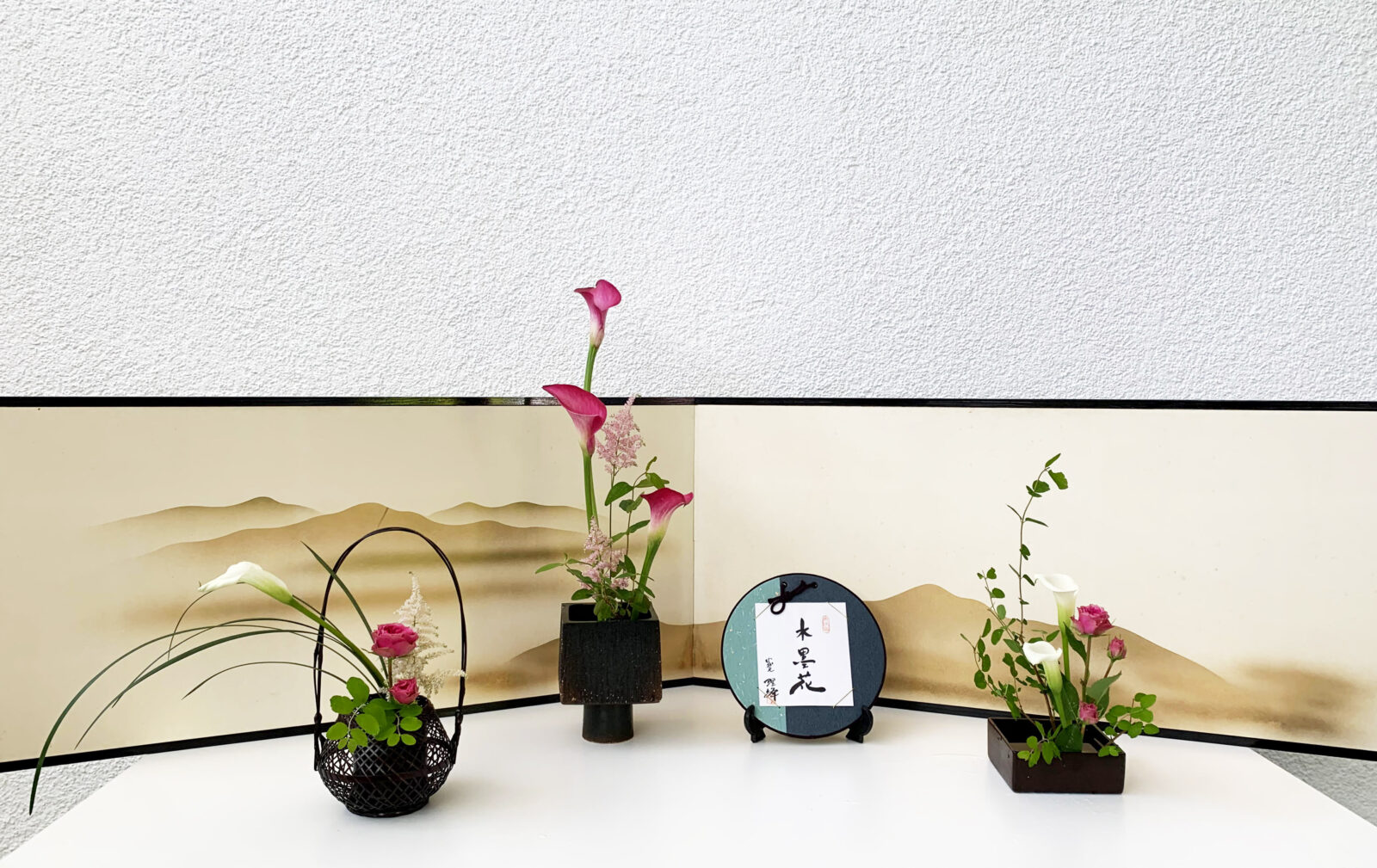
SUIBOKUKA is a form of Ikebana, the Japanese art of flower arrangement.
It possesses the same simple elegance found in traditional Suibokuga or Sumi-e — paintings created with black ink on white shikishi, square cards often used for writing poems and other inscriptions.
SUIBOKUKA
SUIBOKUKA is the arrangement of natural garden flowers or wildflowers found along the roadside, much like those depicted in elegant Sumi-e paintings.
A tree branch, a single flower, wild grasses, or even weeds can become effective materials to create beauty and peace.
Expensive flowers from a florist are not necessarily required.
As a vase, one may use a small household container, a basket, an empty bottle, a piece of lacquerware, or any type of pottery.
Beautifully arranged natural flowers and plants, combined with the arranger’s gentle sensibility, create a world of boundless, universal beauty.
This inventive dimension of Suibokuka gives the work an unexpected depth, just as the creator’s poetry expresses tender impressions of the arranged flowers.
SUIBOKUKA TEMAE
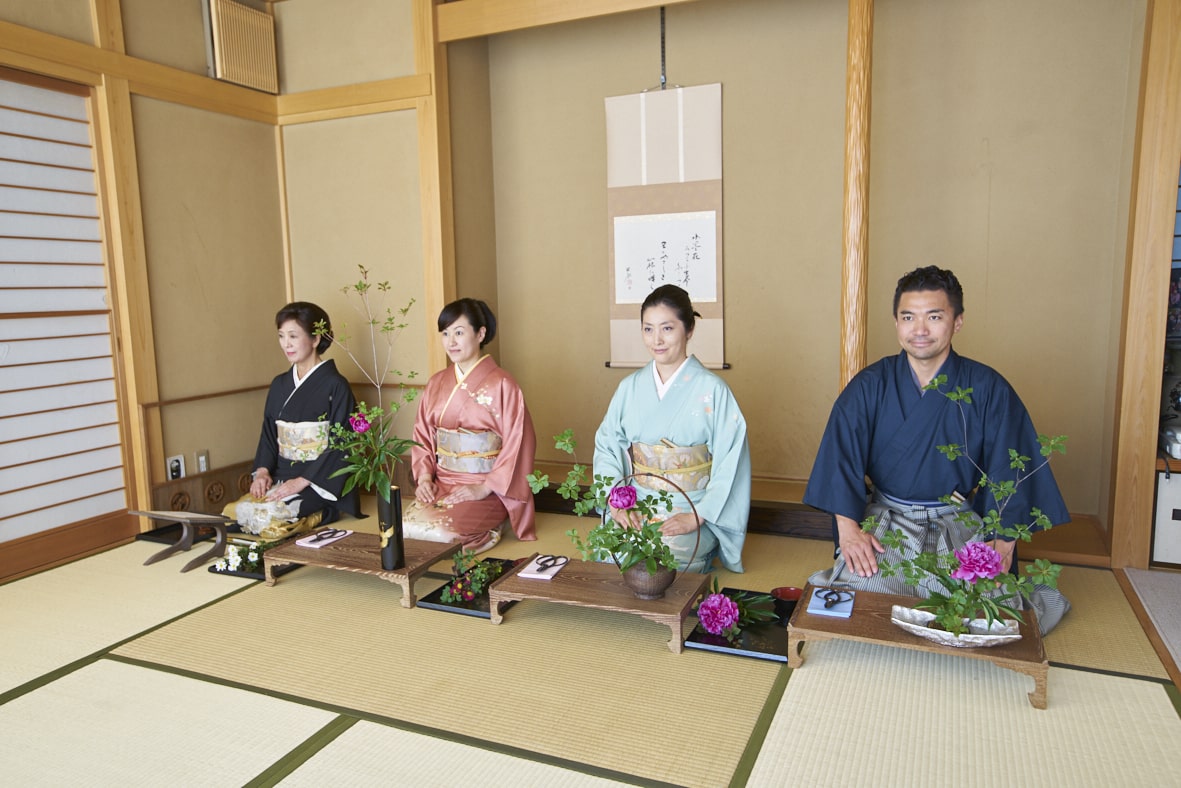
SUIBOKUKA TEMAE refers to the performance of flower arrangement in the same ceremonial manner as the tea ceremony, while at the same time reciting a meaningful waka poem.
Through this ceremonial act, one expresses gratitude toward the flowers and appreciation for the tools used, along with respect and consideration for others.
It also conveys a pleasant sense of cleanliness and purity.
KORYU TOYOKAI
KORYU TOYOKAI believes that the flowers which bloom naturally in the fields are the most beautiful.
The expression of the beauty of flowers is synonymous with the respect that people have for one another.
This means that the spirit of flower arrangement is the same as the spirit of respecting one’s own life.
This idea originates from an ancient Eastern philosophy called TOYO, and it is from this philosophy that the school’s name, KORYU TOYOKAI, is derived.